
Understanding the Risks of Buying Property in Spain
You avoid most risks of buying on the Costa Blanca or Costa Cálida by budgeting 10–15% for costs and doing independent legal checks (nota simple, Catastro, planning). Lock finance and currency early. Across our live listings, asking-price medians are €2,781/m² on the Costa Blanca and €1,900/m² on the Costa Cálida (town medians, to 2026‑07‑01). This pricing frames the risk you’re taking.
What financial risks and hidden costs catch buyers out?
Currency risk bites UK buyers. A 3% GBP/EUR swing can add thousands to your completion funds. Cash buyers skip bank checks, so they must replace that oversight with tighter due diligence or risk overpaying. You also inherit certain debts with the property: IBI (the annual property tax), community arrears and some utility balances if not cleared in writing before completion.
The Spanish Tax Agency publishes current forms and payment channels — check rates before you commit at the Agencia Tributaria site (spanish tax office portal).
Across our live listings, asking-price town medians differ. €2,781/m² on the Costa Blanca (64 towns) versus €1,900/m² on the Costa Cálida (29 towns), data to 2026‑07‑01. That gap reflects town-level medians, not sold prices — it helps you set a realistic risk buffer.
- Asking-price median on the Costa Blanca
- €2,781/m²
- Asking-price median on the Costa Cálida
- €1,900/m²
- Data to
- 2026-07-01
How do you verify property title and legal status in Spain?
You verify ownership and debts with a nota simple from the Land Registry, which shows the registered owner, boundaries and any charges when buying an apartment in Spain. Order it for your property purchase through the Registradores de España portal (land registry search) when you buy property in Spain. Cross‑check the plot and built area in the Catastro (the cadastral map) — mismatches can signal unregistered works or planning problems before any property purchase in Spain.
Confirm the planning status in Spain at the local ayuntamiento (town hall): is every extension licensed, and does the home have a habitability certificate? In coastal towns like Torrevieja, Orihuela Costa or Calpe, also check coastal protection lines and flood maps for properties before signing — a common item in lists of pitfalls of buying property in Spain. Spain’s environment ministry lists the coastal offices that hold these records (coastal demarcation contacts). Spain offers a central contact list there.
Ask for the last two years of community minutes and a certificate of no debt — it surfaces planned works and arrears, so you see both benefits and risks before buying. Land registry fees typically range from €300 to €1,000 depending on declared value for buyers investing in Spanish property. Only transfer a deposit after your abogado — a qualified Spanish lawyer — confirms the documents when buying apartment in Spain.
According to Spain’s INE, property prices rose 3.8% in 2017 — useful context, but your risk from an off‑plan contract is about delivery terms and guarantees, not headlines.
What can go wrong with off‑plan or new‑build purchases?
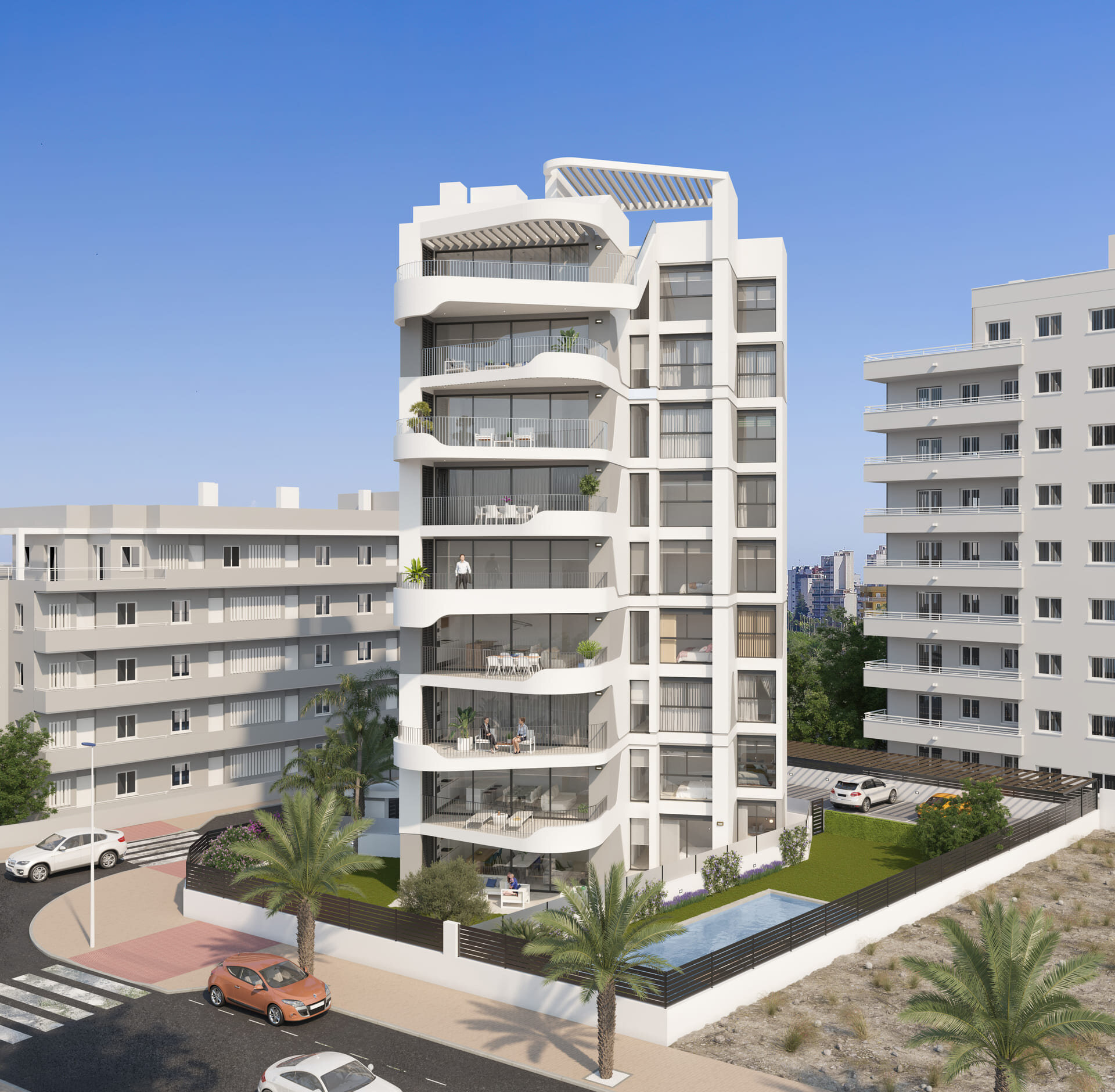
Off‑plan buyers pay large staged deposits (often 10–30%). If the developer in Alicante or Murcia delays delivery or fails, you need a bank guarantee for every euro paid. Insist on individual guarantees tied to your name and stage payments. Reservation or arras contracts often contain tight deadlines and broad forfeiture clauses; have your lawyer amend them before money leaves your account.
New builds carry 10% VAT plus AJD; resales carry ITP (commonly 6–10%). Our own valuation model for this coast adds about 4–6% for a sea view and 2–4% for a private pool. These are model multipliers, not official premiums. Price the features, not the brochure. If you want a deeper route‑map of developer checks, see our article on the step‑by‑step legal process in Spain.
| Topic | New build/off‑plan | Resale |
|---|---|---|
| Upfront tax | 10% VAT + AJD (0.75–1.5%) | ITP 6–10% |
| Typical deposit | 10–30% staged | 10% at arras |
| Key risks | Delivery delay, guarantee gaps | Hidden works, community debt |
What mortgage and financing risks should non‑residents plan for?
Most Spanish banks cap non‑resident mortgages at up to 70% loan‑to‑value. The bank’s valuation (tasación) costs around €250–€700 and can come in below your offer, which means a higher cash contribution at completion. Decide early between variable and fixed rates; over a 20–30 year term, interest‑rate moves change both affordability and resale timing.
Align the mortgage offer’s expiry and the contract’s completion date — penalties for late completion sit in many arras contracts. GBP borrowers face exchange‑rate exposure twice: at completion and across repayments if your income is in pounds. If you intend to buy property with cash, read our focused guide on paying cash for a Spain purchase — including what to specify in the purchase contract.
It covers anti‑money‑laundering checks and how to keep the paper trail clean without a lender in the loop.
Our build‑cost benchmark, from our valuation model for this coast, is €1,350–€1,600/m² of built area — a construction cost only. We use it to sanity‑check some new‑build price lists; it is not a market price and not financial advice.
What taxes and ongoing ownership costs will you face?
On purchase, budget for the main tax in your case: ITP on resales (commonly 6–10%), or 10% VAT plus AJD (about 0.75–1.5%) on new builds. A €500,000 purchase often ends up with €40,000–€65,000 in taxes and fees when you add AJD/ITP, notary, Registry and a 1–1.5% legal bill. Always confirm current rates with the tax office and your lawyer before committing.
After completion, you pay IBI (the annual municipal property tax), waste charges, and community fees if the home belongs to an owners’ association. Non‑residents also file Modelo 210 for rental income or for imputed income on a second home; the Spanish Tax Agency handles these filings and publishes forms and deadlines (Agencia Tributaria services).
If you plan long‑term renting, Spanish law changed in 2023: the Housing Law shifted costs, landlords generally cover agency fees and rent‑default insurance, and from 2025 rent updates use the new IRAV index — check the law’s text on the official state bulletin (BOE legal texts).
Tourist letting adds local layers. In parts of Alicante province and the Mar Menor, you need a tourist licence and must obey community bylaws that may limit short‑stays; in some communities, 60 percent of neighbours must approve for short-term rentals. Budget compliance time and insurance before you count on rental income.
Where does bureaucracy slow you down — and how can you avoid it?
You need a NIE (foreigner ID number) to buy, pay taxes and connect utilities. Apply early; embassies, consulates and Spanish police stations issue it, and the Foreign Ministry explains routes and documents (Ministry of Foreign Affairs). The escritura pública — the public deed signed before a neutral notary — formalises the transfer; the notary checks identities and certain documents but does not replace your lawyer (Spanish Notaries).
Registration at the Land Registry can take weeks, and setting up utilities sometimes lags if previous contracts are irregular. Since Spain now uses the Catastro’s valor de referencia as a tax reference value for some transfers, a declared price below that benchmark in Valencia or Murcia can raise your ITP/AJD base and complicate a mortgage; check your property’s reference at the Catastro portal (Catastro services).
Plan time for opening a Spanish bank account — it is part of how to buy a spanish property smoothly — and arranging local direct debits; missed IBI or community payments quickly become surcharge‑bearing debts attached to the property.
How do you actively reduce risk on the Costa Blanca and Costa Cálida?
Work with a bilingual, independent abogado who represents only you, and a local estate agent who knows Orihuela Costa blocks from Los Dolses to Playa Flamenca, or Mar Menor resorts from Los Alcázares to La Manga. Commission a technical inspection on villas in Torrevieja, Javea or Mazarrón — it is cheaper than fixing hidden damp or a failing roof. Always read the community minutes and obtain a debt‑free certificate before any contract.
Price features rationally. Our Costa Blanca/Costa Cálida valuation model adds about 4–6% for a sea view, +2–4% for a private pool, +2–3% for direct beach access and +2% for a garage or communal pool — model multipliers only, not observed sale premiums. They guide what you pay for, not what you will sell for. For area‑specific property market structure, see our coastal‑home essentials and our overview of Costa Blanca vs Costa Cálida markets.
Your risk‑mitigation steps (quick checklist)
- Budget 10–15% for costs and hedge major GBP/EUR transfers.
- Order a nota simple and match it to Catastro.
- Check planning, flood risk and habitability.
- Lock a mortgage offer that outlives your completion date.
- Confirm the valor de referencia and tax base.
- Demand community minutes and no‑debt certificates.
- Use a buyer‑side abogado to rewrite the reservation or arras contract.
Do “new rules” or rumours change the risks for foreign buyers?
Foreign buyers — including UK citizens — can still buy freely on the Costa Blanca and Costa Cálida. There is no “100% tax on foreigners”; Spain taxes the transaction, not your nationality. New‑builds carry 10% VAT; resales pay ITP; and AJD applies to deeds — always verify current rates on the tax agency’s portal (Agencia Tributaria).
On residency, policy signals have shifted. For property buyers, Spain’s property‑based Golden Visa was phased out nationally; some buyers still reach residency through other visa routes unrelated to real estate. The Foreign Ministry explains current pathways and documents (visa and residency information). Rental reforms since 2023 adjusted eviction procedures and cost sharing, and from 2025 rent updates reference IRAV — read the legal text on the BOE (official bulletin).
For short‑term rentals, local rules tightened in Alicante province and Murcia’s coastal municipalities; always confirm licence availability at the town hall before banking on rental income.
If you are comparing areas by property type and supply, our guide to choosing a Costa Blanca home summarises the main coastal sub‑markets without repeating the legal steps here.
If residency sits in your plan, Spain’s Golden Visa required a minimum investment of €500,000; confirm the current rules because the property‑based route has been phased out nationally.
What goes wrong with deposits and contracts?
Spanish practice often uses a contrato de reserva (to take the home off the market) or an arras contract (a private deposit agreement). A standard deposit is about 10%. Some arras versions allow either party to withdraw with penalties; others lock you in. Your abogado must tailor the clauses to your financing timeline and due‑diligence results before any payment.
For off‑plan, every stage payment must be backed by a bank guarantee in your name. Tie the reservation’s refund terms to failures that matter to you: failed mortgage, adverse registry findings, missing planning or a valuation shortfall. Never accept a reservation that is “subject to lawyer’s review” but still non‑refundable.
Estate agents: how to set timelines that work for you
Our article on the Costa Cálida buying process sets out the timing you should demand from estate agents and developers, and where to push back.
How do Land Registry and Catastro mismatches become real money?
If the Registro (title) shows a smaller built area than the Catastro (map) — or vice versa — banks, tax and planning each “see” different numbers. A Catastro size above deeded area can raise your valor de referencia and, with it, your tax base. A deeded extension missing from planning files can stall your mortgage or trigger legalisation costs.
Check both databases early: the Catastro portal lists plot references and built areas (Catastro online), and the Registradores site explains how to request a nota simple and a cadastral coordination certificate (registral services), while market portals like idealista help you gauge asking‑price context in the spanish real estate market.
In flood‑sensitive zones — parts of Vega Baja, the Segura riverplain, or near the Mar Menor — add a hydrology and coastal‑setback check as part of your real estate due diligence before you sign for a house; Spain’s coastal offices hold the maps and contacts (coastal authorities). The EU also publishes Floods Directive mapping. Adjust your offer if legalisation or regularisation lies ahead.
Is it worth buying now — how does the local property market shape risk and value?
Value sits in the local spread.
Buying off plan: price context across towns
Our live‑listing medians to 2026‑07‑01 show a town‑median asking price of €2,781/m² on the Costa Blanca (Alicante province) and €1,900/m² on the Costa Cálida (Murcia region) for buying off plan and resale, with most towns clustering between €1,251–€3,628/m² and €1,134–€2,541/m² respectively. These are asking‑price medians across towns, not sold prices — they guide negotiation targets and renovation budgets.
If you need new build certainty when buying property, compare developer prices to our construction benchmark (€1,350–€1,600/m² of built area, construction cost only) and to resale €/m² in the same micro‑area. If you want a safe, English‑language walkthrough of steps re buying, our buy property on the Costa Blanca covers the sequence, common pitfalls buying property spain, and key property law points without duplicating this risk map.
For buyers eyeing projects in rustic zones inland from Guardamar or Cartagena, read our guide to buying rustic property in Spain when buying property or planning property ownership — it flags the extra planning hurdles.
New build vs resale properties on this coast — which risk profile fits you?
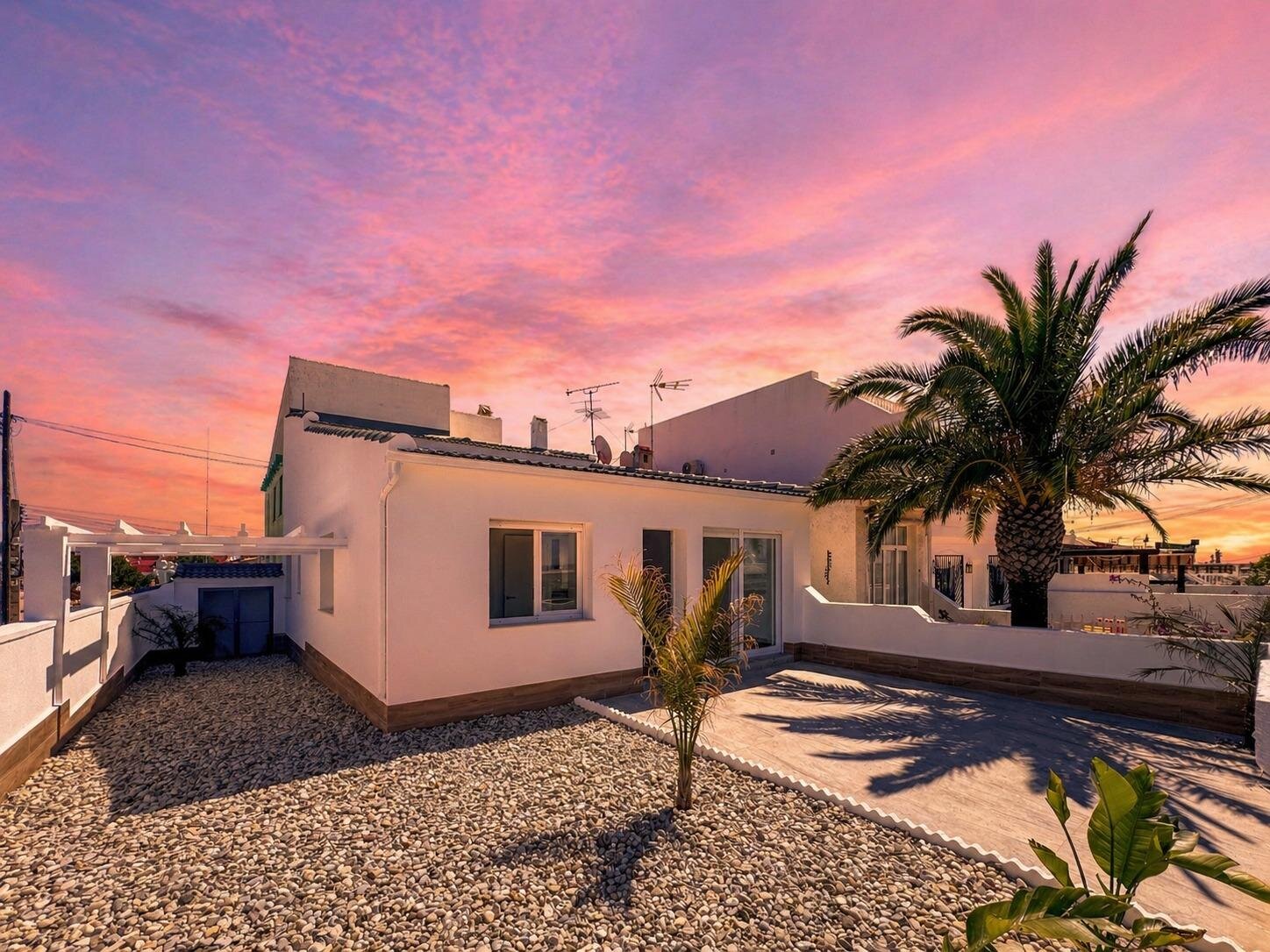
New builds in Torrevieja, Calpe or San Javier offer modern spec and developer warranties, but carry VAT/AJD and delivery risk. Resales often sit closer to amenities and come with community histories you can read, but may hide unlicensed works or older systems that need upgrading. The typical 10% arras deposit and 10–15% total buying costs apply in both lanes; what changes is where you spend due‑diligence time.
If you want new‑build house choice, browse current stock and ask us which developers consistently deliver in each town: start with new builds in Torrevieja or our Costa Blanca new‑build page. If an apartment is your target, our Costa Blanca apartment buyer’s guide explains block‑level checks like lift inspections, reserve funds and façade projects that can double community fees for a season, and how IBI (Impuesto sobre Bienes Inmuebles) works — and what differs from a house.
No article can remove risk. It can make risk visible and priced in. Use independent legal representation, treat the registry and Catastro as two separate truths you must reconcile, and make your reservation contract and finance dates match. Do that, and Costa Blanca/Costa Cálida buying becomes a managed process — not a roll of the dice.
See Also
- Apartments for Sale in Javea, Costa Blanca - 2023 Guide
- Essential Guide to Spanish Property for Sale in Spain
- Property in Spain by the Sea: 2026 Guide to Coastal Homes